
How Startups Should Build Their Brand — And the Order That Actually Works
Most startups build their brand in the wrong order. A logo before the audience is defined. A website before the messaging is clear. Here are the six-step process that actually works, from discovery to scale.
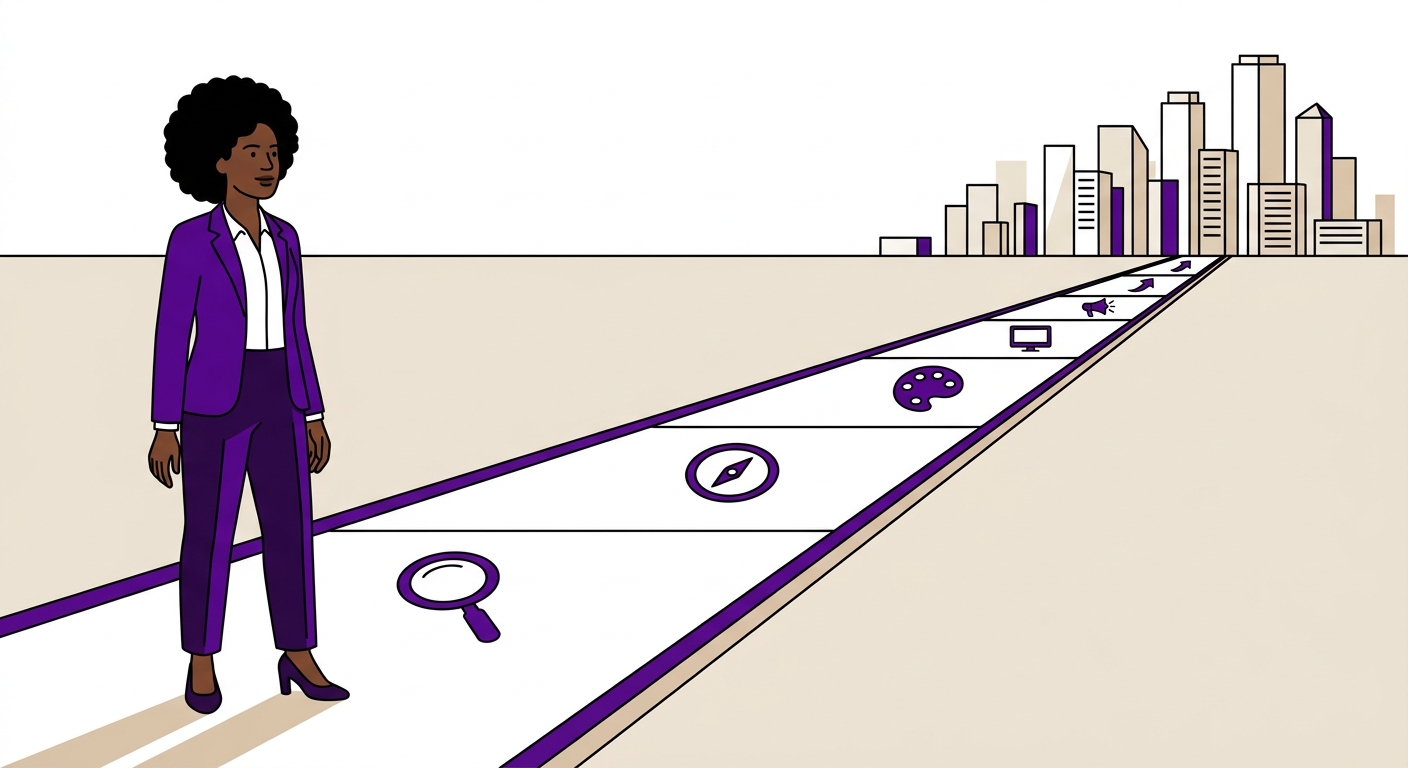
A logo gets designed before the audience is defined. A website goes live before the messaging is clear. Social media starts before the brand has anything consistent to say. And six months later, the founder is rebranding not because the business failed, but because the brand was built in the wrong sequence.
Sequence is everything.
The order in which you make brand decisions determines whether your brand works from day one or needs to be rebuilt from scratch. Here is the process that works and why every step has to come before the next one.
Step 1: Discover and Clarify: Build the Foundation First
Before anything is designed, written, or built, the business itself needs to exist properly.
This means getting the legal and administrative foundation in place first. Business registration and documentation are not afterthoughts; they are the ground everything else is built on. A brand identity, a website, a marketing strategy all of it sits on the assumption that the business behind it is real, legally recognised, and properly structured. Skipping this step is the most common and most expensive mistake early-stage founders make.
Once the foundation is solid, the discovery work begins. Who is this brand for specifically? Not broadly, but the exact person with the exact problem the business solves. What is the purpose behind the business beyond making money? What does the market look like, and where does the gap exist that this brand can fill?
Without clarity at this stage, every decision that follows is a guess. And guesses compound. By the time the brand launches, it is a collection of guesses dressed up as a strategy.
Step 2: Position and Strategise: Decide Where You Stand
Once the foundation is in place and the brand purpose is clear, the next question is where the business sits in the market.
A brand without a position competes on price. A brand with a position competes on value. That distinction determines everything: your pricing, your clients, your growth trajectory, how long it takes to close a deal and how much you close it for.
Positioning is not about being different for the sake of it. It is about identifying the specific space in the market that your brand can occupy authentically and powerfully and committing to it. Every creative decision that comes after this step is judged against that position. If it does not reinforce where the brand stands, it does not belong in the brand.
This is the step most startups skip. They move straight from knowing what their business does to getting a logo and miss the most important question of all: why should someone choose this brand over every other option available to them?
Step 3: Develop the Brand Language: Make the Strategy Visible
This is where strategy becomes something you can see, hear, and feel.
The brand language covers everything that makes a brand recognisable: colour, typography, visual form, messaging, tone of voice. Not chosen because they look good, but chosen because they express the strategy that was built in step two.
This is what most people think of when they think of branding. It is actually the third step. By the time a designer touches the work at this stage, they are not making aesthetic decisions in a vacuum. They are translating a clear strategic brief into a visual and verbal identity. The result is a brand that does not just look right; it means something.
Every colour has a reason. Every font carries intention. Every word in the messaging connects back to the positioning. That is the difference between a brand identity and a logo.
Step 4: Build the Digital Experience: Bring the Brand Into the World
A brand that exists only in a PDF is not a brand yet. It needs to live somewhere people can find it, interact with it, and trust it.
This step takes everything built in the previous three and embeds it into the digital environments where the audience actually exists: the website, social media platforms, digital assets, interface systems. Every touchpoint is designed to feel consistent with the strategy, the positioning, and the brand language.
A website at this stage is not just an online presence. It is the brand's most important sales tool, designed to guide visitors, answer their questions, build trust, and move them toward a decision. Done properly, it does not just represent the brand. It works for it.
Step 5: Gain Visibility and Momentum: Show Up With Intention
With the brand built and the digital presence established, the next step is visibility. Not random posting. Not occasional campaigns. Structured, intentional presence that puts the brand in front of the right people consistently.
This is where content, SEO, social media, and paid strategy come in, but always in service of the brand that was built in the previous steps. The content reinforces the positioning. The messaging stays consistent with the brand language. The channels are chosen based on where the audience actually is, not where everyone else seems to be posting.
Visibility built on a clear brand compounds over time. Every piece of content, every post, every campaign adds to a body of work that gets more recognisable and more trusted the longer it runs.
Step 6: Support, Evolve and Scale: Stay Consistent as You Grow
The final step is not an endpoint. It is an ongoing commitment.
Brands that stay relevant are not the ones that never change; they are the ones that change with intention. As the business grows, enters new markets, adds new services, or shifts direction, the brand needs to evolve alongside it without losing the consistency that built trust in the first place.
This means regularly reviewing the brand against the business it represents. Are the positioning and messaging still accurate? Is the visual identity still doing its job? Is the digital experience still converting? The answers to those questions should drive refinement, not instinct, not trends, not what a competitor just did.
A brand that is actively managed stays relevant. A brand that is launched and left behind gets replaced.
The Order Is Not Optional
Every step in this process depends on the one before it. Registration without strategy produces a business that exists legally but means nothing to its market. Design without strategy produces beautiful work that converts nobody. Visibility without a clear brand produces noise.
The startups that build brands that last are not the ones with the biggest budgets. They are the ones that did things in the right order.